Driving Under (Tyre) Pressure
There’s a tyre pressure for every terrain. Make sure you choose the right one.
You’ve just hopped into your Bushlore vehicle and are ready to tackle any terrain that presents itself.
Of course, you’ve driven a 4X4 before, so naturally you know to drop your tyre pressures for sand driving. But what about driving through mud or over rocks, or even along corrugated gravel roads?
Adjusting the air pressure in your tyres to suit different driving conditions will not only improve your vehicle’s performance, but also aid tyre life, help prevent tyre and track damage, and result in a much more comfortable ride.
We’ve put together a guide that will help you adjust your air pressures accordingly, for a safe and comfortable drive, and preferable no punctures.
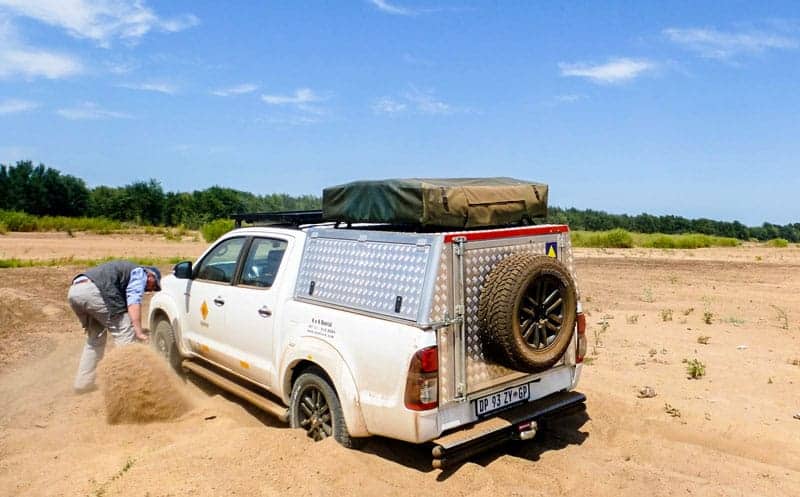
We’ve put together a guide that will help you adjust your air pressures accordingly, for a safe and comfortable drive, and preferable no punctures.
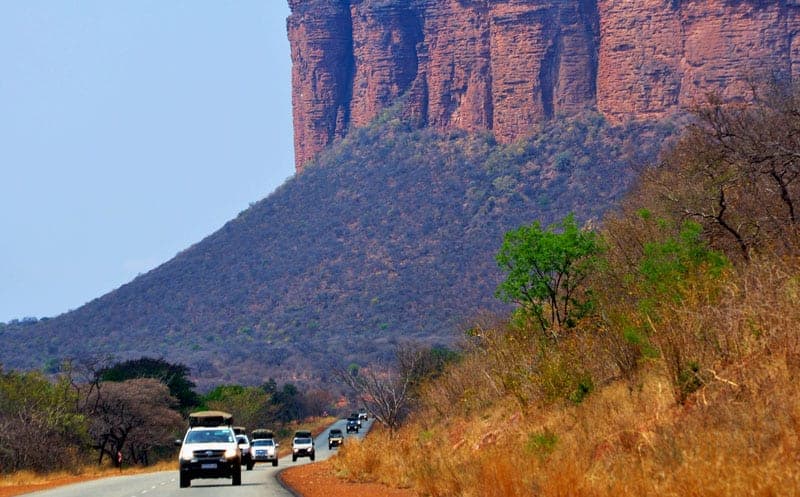
Driving on bitumen roads
As a general rule, you should always follow the recommended tyre pressures as stated on your vehicle’s placard, which is generally between 2.5 to 3.5 bar.
The tyre placard will usually state the different pressure recommendations depending on the tyre size and the load of the vehicle. Tyres typically need to be set at higher pressures at heavier loads or when driving at high speed. Softer pressures tend to create tyre flex, which increase the temperature of the tyre and could lead to a blowout.
The difference in pressure between a cold tyre (before you start driving) and a hot tyre (once you’ve covered some distance) is typically anything between 0.3-0.5 bar.
Gravel roads
Gravel roadsYou should reduce your tyre pressures as soon as you’ve transitioned from Bitumen to gravel for five very important reasons:
1. It improves tractability and road handling
2. It reduces vibrations
3. It helps minimise wear-and-tear on the vehicle
4. Your ride will be more comfortable
5. There’ll be less chance of getting a puncture
Unlike a hard tyre, deflated tyres are more difficult to damage as they tend to ‘bulge’ around foreign or sharp objects, rather than being punctured. We recommend setting your tyre pressures to 1.8 bar (cold-tyre) and not exceeding 100km/h once you’ve deflated your tyres.

Sand driving
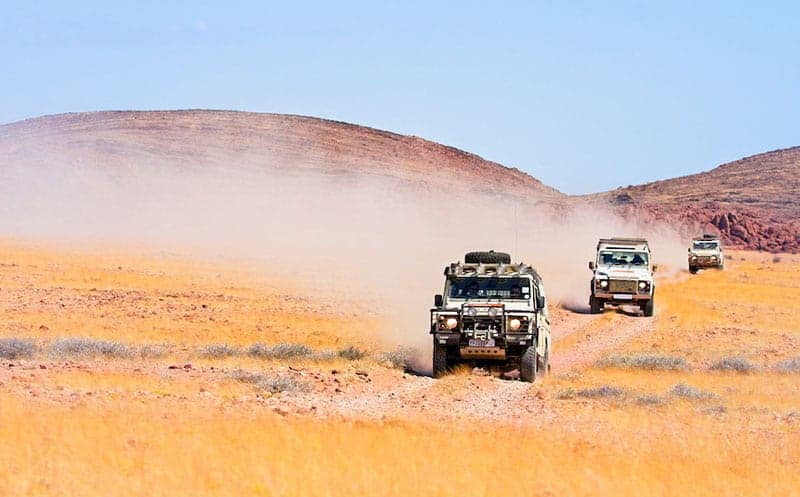
Dropping tyres pressures for sand driving is a given, but how low will depend on several factors, including how soft the sand is, how coarse it is, whether it’s wet or dry, and how hot the ambient temperature is. Lowering air pressure increases the tyre’s footprint, which in the case of sand helps it to float over the surface rather than dig into it.
You can generally stick to 1.8 bar on reasonable sandy roads, but we recommend lowering your tyres to at least 1.2 bar when driving through exceptionally heavy sand that’s difficult to get through. In extreme conditions, you can go as low as 0.8 bar (reserved for tubeless tyres) to increase your tractability.
Lowering your tyre pressure to this extent will expose the side walls of the tyres, so pump your tyres back up once you’ve past the worst areas of the road to lower the risk of damage.
Getting over rocks
Lowering your tyre pressure over rocky terrain allows the tyres to flex more easily so that they can conform to the terrain, which improves traction and reduces the chance of damage from impacts.
Your 4×4 self-drive vehicle is your home for the duration of your holiday in Africa, be it a visit to Botswana, Zimbabwe, Namibia and South Africa, or even a Tanzania self-drive safari. It is crucial that you keep your tyres in good conditions throughout your journey.
In addition, the lowered pressures will make your journey more comfortable and reduce the load on the vehicle’s suspension components.

Driving in the mud
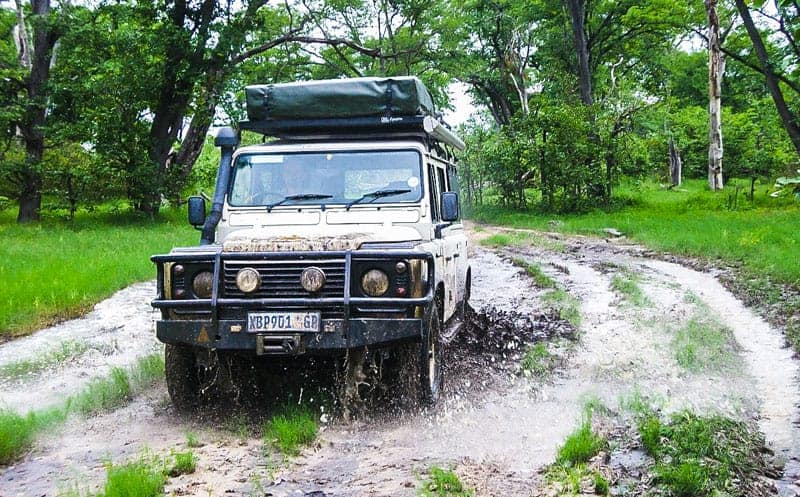
Setting the right air pressure for mud driving is very dependent on the type of mud you’re driving through. If the mud is slippery up top but firm below the surface, then a high air pressure (1.8 bar) will generally suffice.
However, if it’s deep and ‘gooey’ with no firm base, then a lower air pressure is best (1.5 bar).
Always be cautious when crossing muddy sections as these are where you are most likely to get stuck.
The last leg home
Before hitting the bitumen again to sail down the last leg of your journey, remember to reinflate your tyres to the placard recommended pressures. Be sure to also check for signs of damage and repair or replace any tyres where necessary.
Also check the valve stems for leaks and make sure the dust caps are in place.
And if you ever do find yourself in a serious situation, the Bushlore team is just a phone call away – ready to offer professional support wherever you may be.
*Please note that all of the air pressure recommendations here should be used only as a general guide. There are so many factors at play such as track conditions, vehicle weight, and tyre size, that could affect your decision when choosing the right tyre pressures.
READY FOR A SELF-DRIVE ADVENTURE?

PROUD MEMBER OF


