
Bushlore Supports Waterberg Wild Dog Conservation Project
Bushlore Africa, together with Tumbeta Private Game Reserve, provided a game viewer for three months to support the Waterberg Wild Dog Initiative’s (WWDI) eco-tourism project during this year’s denning season. The project is funded by the Endangered Wildlife Trust (EWT), which supports conservation efforts protecting the Waterberg’s wild dogs, among the last free-roaming packs left in South Africa.
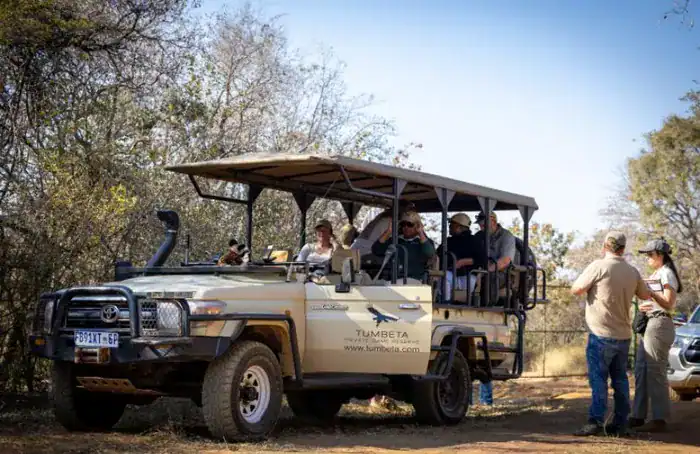
Image Credits: By Toyota South Africa Motors as seen on IOL Article
Why Denning Season Matters
Each year, when wild dog pups are born, the pack becomes far less mobile. Rather than ranging widely, the dogs stay close to the den site to protect and raise the pups, which means they hunt within a much smaller area. As a result, farmers and landowners near the den site come under significantly more pressure, since the pack ends up predating more heavily on game animals in that limited space.
To help offset this impact, the WWDI runs eco-tourism during denning season, bringing guests in to view the pack while funds raised go directly toward supporting the farmers most affected. Running this kind of experience takes a properly kitted-out game viewer that can handle the terrain, which is exactly where Bushlore Africa and Tumbeta Private Game Reserve came in.
Once the pups are old enough, the pack becomes highly mobile again, ranging across a much larger area. This spreads their impact more evenly across the region, easing the pressure on any single farm.
The 22 July 2026 Collaring Operation
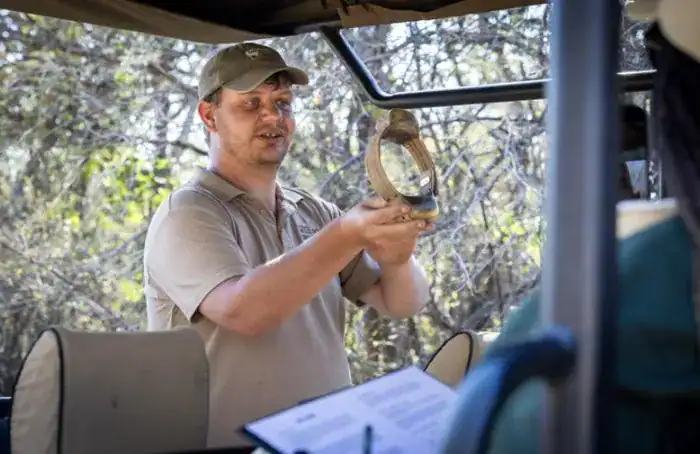
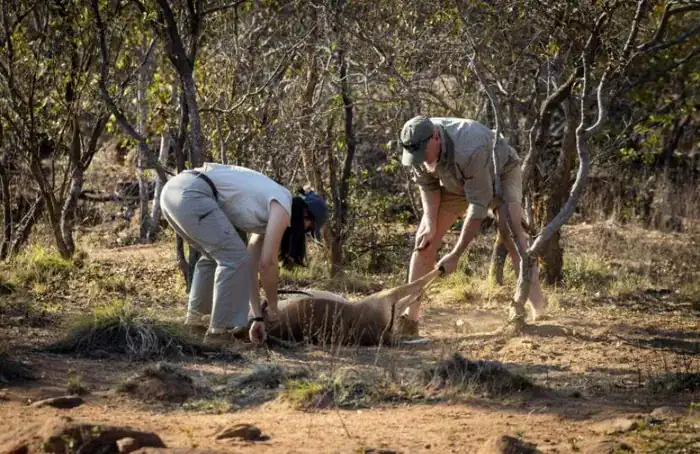
As part of this broader effort, Toyota South Africa Motors (TSAM) and the WWDI led a conservation operation on Tuesday, 22 July 2026, aiming to collar one of the alpha members of the Mokolo Area Pack. Guests were invited along to witness the process from the Bushlore Africa-Tumbeta Private Game Reserve game viewer.
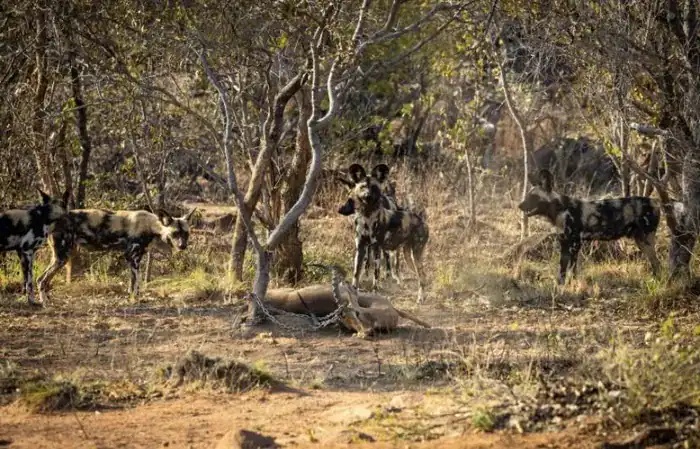
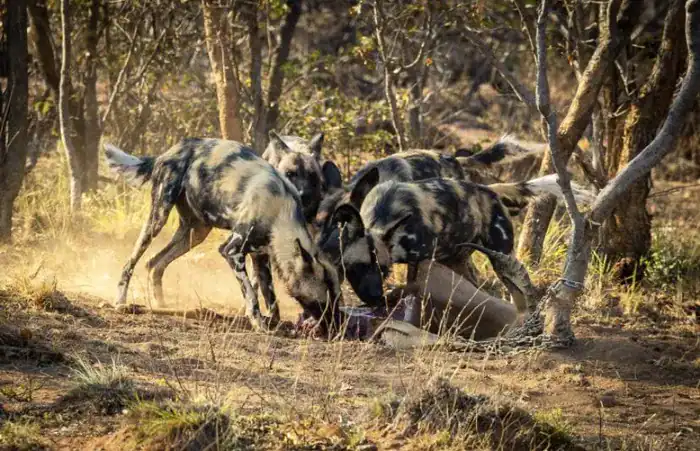
The field team used a baiting method to draw the pack in, and within 30 minutes, members of the pack emerged to feed. The targeted dog stayed surrounded by the rest of the pack throughout though, making it too risky to proceed with the collaring. While the collar wasn’t fitted on the day, the team still gathered valuable insight into the pack’s behaviour.
Image Credits: All by Toyota South Africa Motors as seen on IOL Article
Why The Waterberg Wild Dogs Are So Hard To Find
African wild dogs have earned the nickname “ghost dogs” because they’re rarely seen, even though they cover enormous territories. They’re among Africa’s most endangered predators, with fewer than 5,500 remaining across the continent and only a small fraction belonging to established breeding pairs. The Waterberg is home to one of South Africa’s last free-ranging wild dog populations, with packs moving across farms, private reserves and tourism properties rather than staying within fenced boundaries.
Why Conservation Matters to Bushlore Africa
We build our vehicles to go further into wild places, so it only makes sense that we’d want those places, and the animals that call them home, protected for the long run. Supporting the WWDI’s eco-tourism project meant putting our 4x4s to work for something bigger than a rental, helping fund the farmers who carry the real weight of living alongside these dogs.
Conservation like this takes reserves, landowners, funders like EWT, and organisations like WWDI and TSAM all pulling in the same direction. Bushlore Africa, alongside Tumbeta Private Game Reserve, was proud to help keep this season’s project on the road.
Read The Full Story
For more detail on the July 22 operation, the field team’s experience, and what makes African wild dogs so unique, read the full article on IOL.